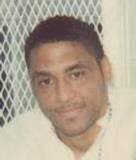
Dear Friends, Family and supporters,
Oh my God, where to start. We are estatic, overwhelmed and full of smiles!
Finally the Death row nightmare is over, no more seeing him from
behind glass- soon we will be able to hug him. Nydesha will be able
to hug him :-)
Without all the hard work from all of you- it would have not been
possible. You guys worked around the clock, made the calls, wrote the
letters, marched with us, signed petitions, helped us organize,
contacted the media and made this cross bareable for us.
We thank God for having you all. We won guys- and all because of the
fantastic team work!!!!!
We love you all!
Tasha & Kenneth
Kenneth Sr & Lawrence
Friday, August 31, 2007

Thursday, August 30, 2007
VICTORY!!!!
August 30, 2007
Movement to Save Kenneth Foster Wins Historic Victory
Family members and supporters of Kenneth Foster, Jr. are jubilant in the reaction to Texas Governor Rick Perry's today's announcement today that he would commute the death sentence of Kenneth Foster, who was convicted under the controversial "Law of Parties" for a 1996 murder in which he had no actual involvement. The Board of Pardons and Paroles had recommened clemency by a vote of 6-1. Foster's execution had been scheduled for tonight.
In a statement announcing the commutation, Perry said, "I am concerned about
Reaction among Foster's family and friends included both joy and disbelief. “We felt a bit of disbelief because Perry’s decision was so unprecedented.” said Dana Cloud of the Save Kenneth Foster campaign. “But everyone is so happy that Kenneth will be able to touch his wife and daughter and that we have a chance of seeing him free. Anything is possible when you are alive.”
Claire Dube, a close high-school friend of Kenneth’s and an active member of the Save Kenneth Foster Campaign, broke into tears when she heard the news. “We don’t even know what to say. It’s incredible.”
Keith Hampton, Foster’s attorney, also expressed relief and happiness at winning his client’s life. Hampton thanked the activists of the grassroots movement that started in Austin and spread around the world for putting the necessary pressure on the Board and the Governor to win. “Extra-legal means work,” he said.
“Governor Perry once said that there was no hue and cry against the death penalty in Texas,” commented Lily Hughes of the Campaign to End the Death Penalty. “Well, here was your hue and cry.”
Foster’s family and other supporters will continue to work to free him from prison. “It seems like ten years on death row under 23-hour lockdown could amount to time served for any crime that Kenneth ever committed,” Cloud said.
Perry’s decision is historic. Not only has the Board of Pardons and Paroles rarely recommended clemency (by one count, 3 times since 1982), but Rick Perry has overseen more executions than any Governor of the State of Texas, including George Bush.
“This case demonstrated to the world just how arbitrary and capricious capital punishment is,” Cloud said. “It gives people pause when someone who killed no one could come this close to being executed.”
“Public sentiment has been turning against capital punishment,” Hughes said. “We’ve seen a lot of states stop executing people. Winning Kenneth’s life might be a real turning point in the history of the death penalty in Texas.”
###
UPDATE: Board Votes in Kenneth's Favor, All Eyes on Perry
The Board of Pardons and Paroles today voted 6-1 to recommend clemency for Kenneth Foster. It is now up to Governor Perry to make the final decision. Call him and demand that he do the right thing:
Call 800-252-9600 (Texas callers) or 512-463-1782 (Austin and out of state), and send faxes to 512-463-1849.
Call 800-252-9600 (Texas callers) or 512-463-1782 (Austin and out of state), and send faxes to 512-463-1849.
No News Yet
It is about 10:30 a.m. central time and there is still no word from the Board of Pardons and Paroles or the U.S. Supreme Court. Executions in Texas typically begin at 6 p.m.
Wednesday, August 29, 2007
Kenneth's Story in the New York Times and London Independent
HOUSTON, Aug. 29 — Kenneth Foster has a date on Thursday with the executioner’s needle. Not for killing anyone himself but for what he was doing — and may have been thinking — the night in 1996 when he was 19 and a sidekick pulled the trigger, killing a 25-year-old San Antonio law student.
Ensnared in a Texas law that makes accomplices subject to the death penalty, Mr. Foster, 30, is to become the third death row inmate this week, and the 403rd since capital punishment resumed in Texas in 1982, to give his life for a life taken.
But unlike most others condemned to death in this state, Mr. Foster, a onetime gang member, aspiring musician and prison poet from San Antonio, is not a murderer in the usual sense. He was convicted and sentenced to die for abetting a killing — 80 feet away — that he may, or may not, have had reason to anticipate.
The man who pulled the trigger is dead, executed last year. One accomplice is serving life in prison as a result of a plea bargain, and a second is serving life for a separate murder.
Now, failing a last-minute reprieve, Mr. Foster, the group’s driver in a robbery spree — who argues that he never was party to the murder — is facing lethal injection. His guilt, affirmed so far in every appeal, including five turned away by the United States Supreme Court, hinges in large part on difficult questions of awareness and intention.
Other states hold co-conspirators responsible for each other’s criminal acts in a so-called law of parties. But few of those have a death penalty. And no other state executes them on the scale of Texas.
With polls showing capital punishment still enjoying majority support in Texas and around the country, but by dwindling margins, the Foster case has spurred vigils and protests from abroad to the death house in Huntsville, as well as a backlash by victim’s rights advocates who still mourn the slain law student, Michael LaHood Jr.
It has also smudged concepts of guilt and innocence. If Mr. Foster is not legally guilty of murder, as his lawyer, Keith S. Hampton, and supporters contend, many find it hard to pronounce him blameless.
“I’d hate to use the word innocent,” said his father, Kenneth Foster Sr., a former heroin addict who told a church audience in Houston Saturday that he used to take his baby son with him on drug runs and petty crimes. He said his son “should be punished to some degree, but not put to death.”
At the heart of the case is Texas’s law of parties under which those conspiring to commit one felony such as a robbery can all be held responsible for an ensuing crime, like murder, if it “should have been anticipated.”
In 1982, in Edmund v. Florida, the United States Supreme Court found that the Constitution barred the death penalty for co-conspirators who do not themselves kill. But five years later in Tison v Arizona, the justices carved out an exception, ruling that the Eighth Amendment did not forbid execution of a defendant “whose participation in a felony that results in murder is major and whose mental state is one of reckless indifference.”
According to evidence in the case, on the afternoon of Aug. 14, 1996, Mr. Foster had borrowed his grandfather’s rented white Chevy Cavalier and was driving three companions — Julius Steen, Dewayne Dillard, and Mauriceo Brown — on a robbery spree through San Antonio. Mr. Steen and Mr. Brown, with Mr. Dillard’s gun, held up four people.
After midnight, they trailed two cars to a street where Mr. LaHood had just driven home, followed by a companion, Mary Patrick. She and Mr. Steen exchanged some remarks. Mr. Brown took the gun, chased Mr. LaHood and shot him dead. Ms. Patrick later characterized it as a robbery.
Mr. Foster and his companions fled but were soon stopped by the police. Mr. Foster denied participating in the earlier robberies or the shooting, claiming the group had been out looking for clients for his music business.
He was tried together with Mr. Brown, who was also convicted and was executed in July 2006. Mr. Steen and Mr. Dillard, facing charges in other cases, were not tried. But Mr. Steen testified he did not believe that Mr. Foster knew that Mr. LaHood would be robbed, although Mr. Steen said, “I would say I kind of thought it.”
Later Mr. Dillard testified in Mr. Foster’s appeals, claiming that before they reached the LaHood house, Mr. Foster sought to end the night’s spree so he could return the car to his grandfather. Therefore, Mr. Fuller’s lawyer, Mr. Hampton, argued, his client lacked the mindset to be legally culpable for the killing that followed.
Mr. Hampton also contended that Mr. Steen and Mr. Dillard were improperly withheld as crucial witnesses, and that mitigating testimony about Mr. Foster’s upbringing was not presented to the jury.
“I was in jail at the time he got arrested,” said Kenneth Foster Sr., saying that a strategy of portraying his son as churchgoing and well-raised had backfired.
“One of the jurors said he should have known better,” the elder Mr. Foster said. “They never called me. If the mitigating evidence had been put on, he never would be on death row.”
Man faces execution for being in car with killer
By Leonard Doyle in Washington
Published: 30 August 2007
A 30-year old man, Kenneth Foster, is set to be executed today for a murder which he not only did not commit, but which the authorities in Texas accept was carried out by another man in 1996.
The trial judge, the prosecutor, and the jury that sentenced Mr Foster to die admit that he did not murder the victim Michael LaHood. But, under a controversial "law of parties", in Texas an associate of a perpetrator can be found co-responsible in a capital case. The law imposes the death penalty on anybody involved in a crime where a murder occurred.
This is how Foster, a black man out on a crime spree with some friends, came to be convicted of murdering Mr LaHood, a white man and the son of a prominent lawyer . The killer, Mauriceo Brown, was executed last year.
Foster has been politically active on death row. He has organised fellow prisoners, becoming a leader in the anti-death penalty movement in Texas and starting a non-violent movement called Drive, to campaign over conditions on death row. Unlike most other inmates he had several years of college education before jail.
On the night of the murder, Foster and several friends had been driving around drinking and committing robberies. On the way home, Brown left the car to talk to a woman. He then got into an altercation with Mr LaHood and shot him dead in the driveway of his house in San Antonio.
The murder occurred as Foster was sitting in a car some 30 metres away with three other passengers – but prosecutors said there was a conspiracy to commit the crime and therefore he deserved a death sentence. Since Foster's original trial, the other passengers – none of whom was tried under the law of parties – have testified that Foster had no idea a shooting was going to take place.
The Texas Court of Criminal Appeals denied Foster's final appeal on Tuesday and his last recourse is a pardon from Texas Governor Rick Perry. This seems unlikely, as five of the seven Board of Pardons members must recommend clemency first. Last week Texas executed its 400th prisoner since it resumed capital punishment in 1982.
Recently a friend of the victim has described the pending execution as vengeance and called for it to be halted. The LaHood family has so far not offered support to Foster's case. LaHood's mother said she supported the execution of the actual killer.
Tuesday, August 28, 2007
Amnesty International Statement in Support of Keneth
http://www.amnestyusa.org/document.php?lang=e&id=ENGUSA20070824002
AMNESTY INTERNATIONAL USA
PRESS RELEASE
August 24, 2007
Contact: Wende Gozan at 212/633-4247 or Brian Evans at 202/544-0200 x496
AMNESTY INTERNATIONAL USA
PRESS RELEASE
August 24, 2007
Kenneth Foster Execution a 'New Low for Texas' and a 'Shocking Perversion of the Law,' Says Amnesty International
Foster Convicted For a Murder He Did Not Commit or Predict; Human Rights Organization Calls on Texas Board of Pardons, Gov. Perry to Grant Clemency
Foster Convicted For a Murder He Did Not Commit or Predict; Human Rights Organization Calls on Texas Board of Pardons, Gov. Perry to Grant Clemency
(Washington, D.C.) -- Amnesty International USA (AIUSA) today condemned the scheduled August 30 execution of Kenneth Foster, who was convicted of a murder he did not commit and has consistently denied knowing would occur. The human rights organization has mobilized its international membership to urge the Texas Board of Pardons and Paroles and Governor Rick Perry to grant clemency.
Foster was sentenced to death in 1997 for the murder of Michael LaHood under Texas' controversial "law of parties." This law abolishes the distinction between principal actor and accomplice in a crime and allows both to be held equally culpable.
"This is a new low for Texas," said Larry Cox, executive director of AIUSA. "Texas has the most far-reaching 'law of parties' in this country, further marking it as the death penalty capital of the United States. In essence, Kenneth Foster has been sentenced to death for leaving his crystal ball at home. There is no concrete evidence demonstrating that he could know a murder would be committed. Allowing his life to be taken is a shocking perversion of the law."
In the early hours of August 15th, 1996, Mauriceo Brown, DeWayne Dillard, Julius Steen and Kenneth Foster stopped outside the house of Michael LaHood. Brown got out of the car, robbed LaHood, and then shot him. To convict Kenneth Foster of capital murder under the law of parties, the prosecution had to prove that there was a conspiracy between him and Brown to rob LaHood, and that Foster should have anticipated that murder might have occurred during the robbery. At the trial Brown testified that there had been no discussion of robbing LaHood before he got out of the car.
Dillard testified at a state appeal that after the shot was heard, Foster had appeared surprised and panicked. Steen signed an affidavit in 2003 stating that, "There was no agreement that I am aware of for Brown to commit a robbery at the LaHood residence. I do not believe that Foster and Brown ever agreed to commit a robbery. I don't think that Foster thought that Brown was going to commit a robbery."
Brown was executed on July 19, 2006. Neither Steen nor Dillard, the two other accomplices, was prosecuted for LaHood's murder. Yet, as the evidence stands today, their and Foster's culpability in the crime appears to be the same.
Contact: Wende Gozan at 212/633-4247 or Brian Evans at 202/544-0200 x496
Austin-American Statesman Publishes Another Editorial in Favor of Kenneth
EDITORIAL
Another stain on justice, Texas style
EDITORIAL BOARD
Wednesday, August 29, 2007 Click-2-Listen
Gov. Rick Perry can spare a life, uphold justice and bring a semblance of honor to Texas this week, if only he will seize the opportunity.
Perry has the power to stop the execution of death row inmate Kenneth Foster, scheduled to die Thursday for a crime everyone acknowledges that he did not commit. The state's Board of Pardons and Paroles also can halt the execution.
Foster, 30, is not the sweetheart anti-death penalty activists insist he is. He was a thug, armed robber and drug dealer in San Antonio. But he did not commit the murder that put him on death row.
Foster was driving the car with three criminal friends on a robbery spree the night Michael LaHood, 25, was shot and killed in 1996. One of Foster's passengers, Mauriceo Brown, shot LaHood in the face during an attempted robbery. Brown was executed for that crime last year.
Foster was convicted under Texas' Law of Parties statute that considers those who had a major role in a capital crime as guilty as the actual killer. Texas is the only state that applies the Law of Parties to capital crimes, and an estimated 80 death row inmates have been condemned to die under that statute.
Foster and the others in the car with him say Foster had no idea Brown would kill LaHood. But prosecutors and a jury said Foster should have known that Brown intended to shoot LaHood and should have prevented it.
The inescapable problem with the Law of Parties is that a jury has to go back in time and read the defendant's mind, guess at his intention. The sentence is based on what the jury believed Foster was thinking when the crime occurred. No one's life should hinge on guesswork by jurors.
A federal district judge overturned the death sentence in 2005 after determining that Foster didn't play a major role in the conspiracy to rob LaHood. But the 5th U.S. Circuit Court of Appeals reversed the district court and reinstated the death sentence in 2006. The U.S. Supreme Court refused to hear Foster's appeal.
So now it's up to Perry or the Board of Pardons and Paroles to do the right thing and spare Foster's life by granting him a reprieve. It's the only just thing to do. If the governor or parole board allows this execution, Texas will be further stained by injustice.
Since the death penalty was reinstated by the Supreme Court in 1976, Texas has executed 400 people, far more than any other state. That's more than a third of all the 1,100 executions in the United States in that same period.
Everyone can sympathize with LaHood's family and share their grief at their loss. But granting Foster a reprieve in no way endangers this state's embrace of the death penalty or threatens to turn a cold-blooded killer loose on the streets.
It only assures that one man is not put to death for a crime committed by someone else. It's simple justice.
 |
| |
| Find this article at: http://www.statesman.com/opinion/content/editorial/stories/08/29/0829foster_edit.html |
Subscribe to:
Posts (Atom)